Run Locally
Run AgentOS and Postgres locally with Docker.
Today we're going to run an agent platform made of:
- AgentOS on FastAPI
- Postgres + pgvector
Prerequisites
- Docker Desktop installed and running
- An OpenAI API key for models and embeddings
Run your agent platform
Clone the template
git clone https://github.com/agno-agi/agentos-railway.git agent-platform
cd agent-platform
To make this codebase yours, run rm -rf .git and push to your own git repo.
Configure your environment
cp example.env .envOpen .env and set OPENAI_API_KEY. Everything else has sensible defaults.
Start the platform
docker compose up -d --buildThis runs two containers: a FastAPI app on port 8000 and a Postgres database on port 5432. The first build takes a few minutes.
Verify it's running
Open http://localhost:8000/docs.
You'll see the OpenAPI spec: every agent action exposed as a REST endpoint.
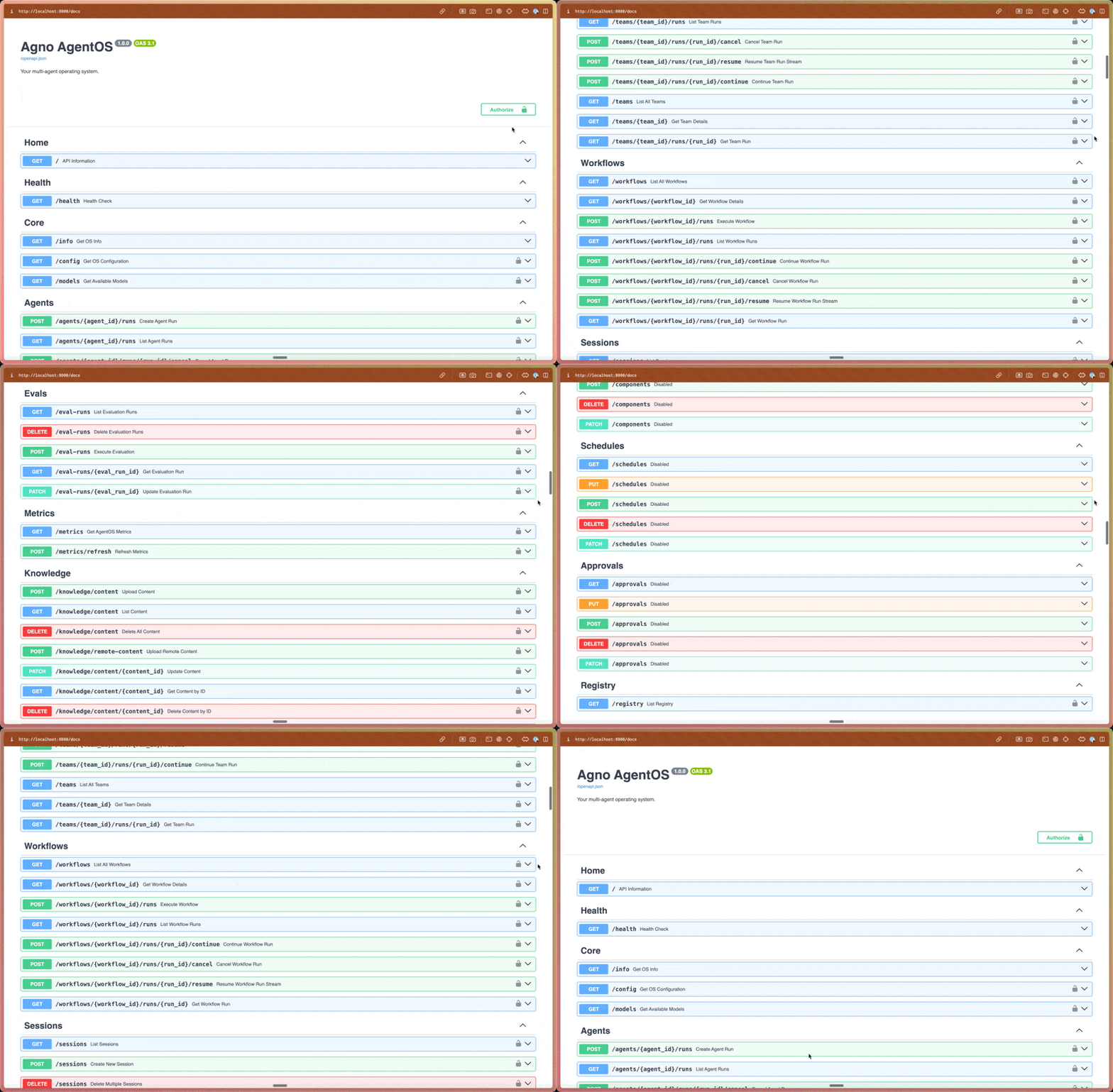
You now have an agent platform made of AgentOS on FastAPI and Postgres. The AgentOS server exposes 80+ endpoints for runs, sessions, memory, knowledge, and evals.
AgentOS also comes with a UI at os.agno.com.
Connect the AgentOS UI
- Open os.agno.com and sign in.
- Click Connect OS, enter
http://localhost:8000as the URL, and name it Local AgentOS. - Click Connect.
The template registers three agents and a coordinating team:
| Component | What it does |
|---|---|
| Platform Builder | Builds agents, teams, and workflows through Studio tools. |
| Platform Manager | Inspects runtime state, eval history, deployment checks, and schedules. |
| Platform Engineer | Reads the repository to answer questions about source and configuration. |
| Agno team | Coordinates the specialists and has web tools for current information. |
Try these prompts:
"Build an agent that tracks AI news and writes a daily brief" → Platform Builder.
"How healthy is the platform?" → Platform Manager.
"Which agents are registered in this codebase?" → Platform Engineer.
"What did Anthropic publish about agents recently?" → Agno team.
Open Sessions and Traces in the sidebar. Every run is captured with full message history, tool calls, and timing. This is what powers the iteration loop on the next page.
Summary
We now have a locally running agent platform with:
- Our agent runtime (AgentOS) running on port 8000 with request isolation, session management, scheduling, and 80+ endpoints.
- A Postgres database for storing sessions, memory, knowledge, and traces.
- Eight coding-agent skills in
.agents/skills/: setup, create, extend, improve, create evals, repair eval failures, review, and deploy.
Hot-reload is on. Edits to Python files in the source (agents/, app/, db/, evals/, workflows/) are live in ~2s.